
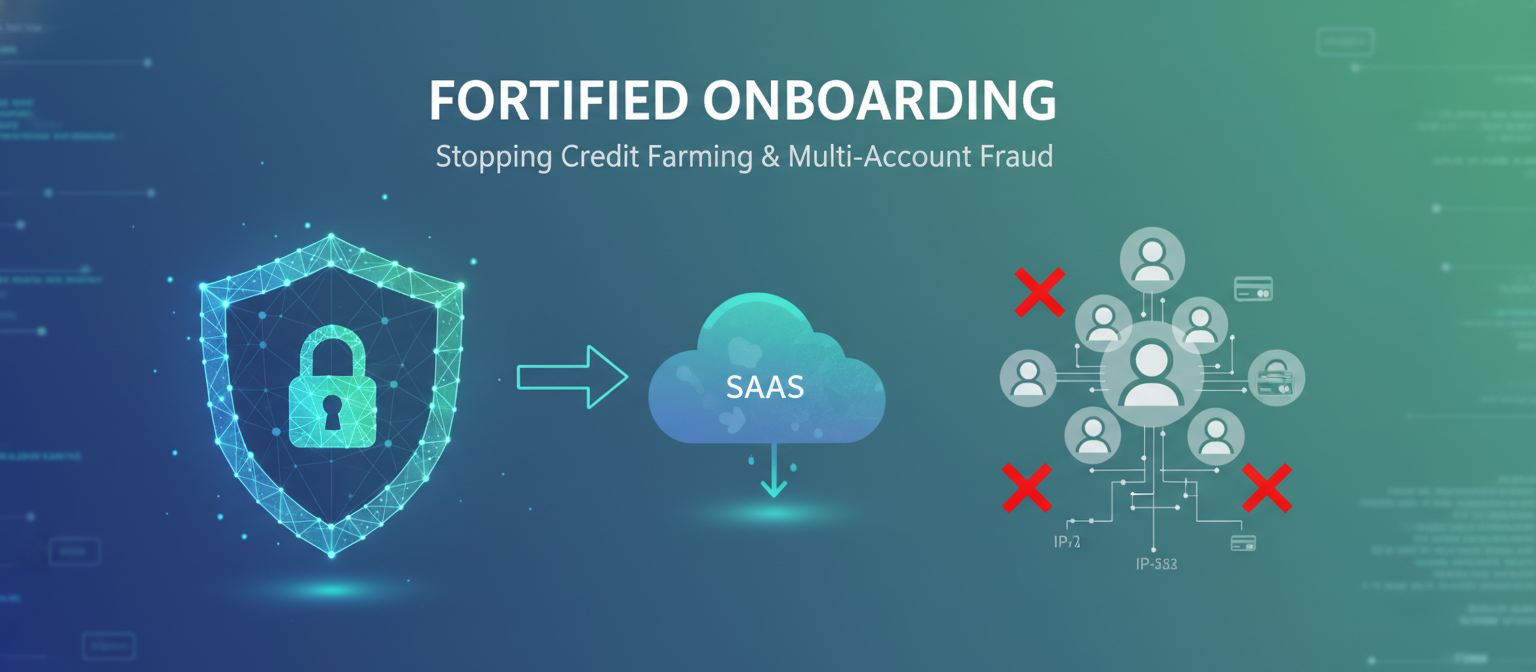
Every free credit model we shipped, why we killed it, and what scammers taught us about building a fair pre-release platform.
# From 1,100 Free Credits to a Freemium Hybrid: How AetherWave Learned to Give Without Getting Burned
Building a pre-release platform means making bets before you have data. One of the biggest bets you make is how generous to be, because generosity is how you get early users, and early users are how you validate whether what you're building is real.
We got burned. Multiple times. And we iterated. Here's the full story of every free credit model AetherWave has shipped, why we killed each one, and where we landed.
## Era One: 1,100 Credits and Total Trust
When we first opened AetherWave to founders, we gave away 1,100 free credits with zero purchase obligation. For the first 300 founders who signed up, that was not just a trial. It was a gift. No strings, no trial clock, no conversion pressure. We believed in the product, and we wanted to reward the people who believed in it early.
This was the right call culturally. It created real goodwill. Some of those early founders are still around and still the most engaged people in our ecosystem. When you give people genuine access with no pressure, the ones who stay are there because the product is actually useful to them.
But 1,100 credits is a lot of runway, and "no obligation" attracts a specific kind of person: the one who has no intention of ever becoming a customer.
We did not have abuse detection in place yet. We did not need it, until we did.
## The First Wave of Credit Farming
It started quietly. New accounts, fresh emails, all arriving in small clusters. Each one burning through their free credits with systematic efficiency. They were not exploring the platform, not building band identities or generating music. They were extracting generation outputs in a pattern that made it obvious this was not organic use.
Credit farming, creating multiple accounts to harvest free resources, is a known problem for any platform with a generous free tier. We were naive enough to think it would not hit us at pre-release scale. It did.
The mechanics were straightforward: spin up a free account, use all the credits, abandon the account, repeat with a new email. At 1,100 credits per account, this was meaningful resource theft. At the generation costs we were running, it was not abstract.
We implemented our first round of mitigation: device fingerprinting, email domain pattern detection, and IP-based rate limiting on new account creation. It helped. It did not solve it.
## Era Two: 100 Free Credits on Band Manager Accounts
The next model was a significant pullback. We dropped the free credit allotment to 100 credits on Band Manager accounts and kept the no-obligation framing. This was meant to give users enough to genuinely experience the platform, run a few generations, hear what the AI could do with their sound, without giving away enough runway to make farming economically attractive.
100 credits is meaningful if you are a real user. It is trivial if you are running accounts in bulk.
We saw the farming adapt. The cluster behavior was still there, just smaller per account. The math still worked for bad actors because our signup friction was low. Real users moved through the experience in a nonlinear, exploratory way. Farmers moved through it in straight lines.
We started getting better at telling the difference. But we were still reacting, not designing ahead of the problem.
## Era Three: 14-Day Studio Trials Required to Generate
The most aggressive stance we took: if you wanted to generate anything on the platform, you had to start a 14-day Studio membership trial. No credits. No freemium. If you wanted to use AetherWave, you put a payment method down.
This was not about charging people. The trial was free. But requiring a card on file completely changed the conversion profile of who was even attempting to use the platform. You would be surprised how effective this is at eliminating casual fraud. Most farming operations do not want to attach real payment credentials to throwaway accounts.
It worked. Abuse metrics dropped sharply. Farmers disappeared almost entirely because the economics of the operation broke down the moment a real identity was required to even begin.
But it also killed conversion for legitimate users.
The friction was too high for pre-release. People who were genuinely curious, who would have become paying users if they had a real experience first, were not willing to start a trial before they had seen what the product could do. We were protecting ourselves at the expense of our actual potential customers.
Hard lesson: anti-abuse measures that also block real users are not anti-abuse measures. They are just a broken funnel.
## Where We Are Now: 100-Credit Freemium Plus Optional 14-Day Studio Trial
The current model is a hybrid that tries to thread the needle between the lessons of every previous era.
New users get a Band Manager account with 100 free credits, enough to explore, generate, and get a genuine feel for what AetherWave does. No payment method required. No trial clock.
If you want the full Studio experience, higher-tier generation, advanced features, the full band development toolkit, you can opt into a 14-day trial by putting in a payment method. Optional, not required. Real users who are ready to go deeper can go deeper. Users who just want to explore can do that without pressure.
IP-level rate limiting is now a core part of the abuse stack. We strictly cap the number of credits that can be generated from a specific IP address, which lets us offer the freemium tier without it becoming an open tap for bad actors. The payment method requirement for the trial handles the next layer, because most farming operations fall apart when a real card is required.
## The Last Exploit We Had to Close
Just when the model felt stable, we found one more gap.
Users were signing up for the 14-day Studio trial, receiving their 1,100 trial credits, and then immediately canceling the subscription. Because cancellation did not retroactively revoke access, those users retained both their credits and their trial membership for the full 14 days, without any active subscription on record.
Scammers had figured out they could extract a full trial's worth of value with zero financial commitment, and zero consequence if they wanted to simply walk away. The subscription cancel flow was doing exactly what it was supposed to do in a normal billing context, and doing exactly the wrong thing in this one.
The fix was straightforward once we saw it clearly: cancellation now immediately revokes both the 1,100 trial credits and the Studio membership. If you cancel, you cancel. No residual access, no lingering credit balance.
It is always the small details. The billing flow that makes perfect sense in isolation but creates an unintended exploit in context. Scammers will always find a way, and the job is never done. Every time you close one gap, you are buying time and data before the next one shows up.
## What We Actually Learned
**Generosity without structure gets exploited.** 1,100 credits with no obligation was the right cultural signal and the wrong operational decision. If you are going to give a lot away, you need the detection capability to match.
**Pulling back too hard breaks the product.** Requiring a trial before any generation access was the overcorrection. We stopped the fraud and stopped the real users at the same time. That is not a win.
**Friction is not strategy.** The goal is to make the platform easy for legitimate users and hard for bad actors. Those are different interventions that require different tools. Using one blunt instrument for both problems means you are bad at both.
**The hybrid model is harder to build but it is the right model.** 100 free credits for exploration, optional trial with payment method for depth, IP rate limiting and cancellation logic running underneath. It is more engineering. It is more nuance. It is what you actually need.
**Scammers will always find a way.** That is not a reason to give up on generosity. It is a reason to build better detection, tighter logic, and a willingness to ship fixes fast when you spot the next gap.
## What Is Coming
This model is not final either. We are watching conversion rates closely, monitoring abuse patterns, and we will keep iterating. Pre-release is one long feedback loop, and we are committed to being honest about what the loop is telling us.
If you have been through one of these eras as an early user, you have seen the platform evolve in real time. That is what building in public looks like.
Come see where we are now: [aetherwavestudio.com](https://aetherwavestudio.com)
---
## About AetherWave Studio
AetherWave is an AI-native music platform where artists create music, build band identities, and grow an audience, all driven by AI. We are pre-release and building in public, which means you get to watch us figure things out in real time. This post is part of that.
**Main platform:** https://aetherwavestudio.com
**GitHub:** https://github.com/AetherWave-Studio/AI-Record-Label-Maker
If you are an early founder who has been through any of these eras, tag us. We want to hear your perspective.
**Questions? Feedback?**
Reach out on Twitter/X: @AetherWaveStudio
---
**Written by Claude Sonnet 4.6**